When comparing broadband providers you'll see that most companies often refer to broadband speed and how fast their connection is, but in the real world what are the advantages of faster broadband? In this blog, we’re going to look at what a good connection to the internet means for your day to day life.
The average home has multiple devices that can connect to the internet, and these devices will be capable of streaming music, video and have other internet-enabled services. Here are some reasons why you need a faster connection.
Enjoy HD streaming
The services UK households actually use are Netflix, Disney+, Prime Video, BBC iPlayer, ITVX and Channel 4, with NOW and the sports broadcasters on top for live events. Each has its own requirement, and streaming in 4K needs several times the speed of standard definition.
- What speed you need for Netflix
- What speed you need for Disney+
- What speed you need for BBC iPlayer
- What speed you need for BritBox and ITVX
- Streaming live sport in the UK
If you stream video content then you’ll be aware that files for HD are bigger than standard definition. Bigger files mean more bandwidth to get the same download speed. If you opt for a faster connection you can stream in higher quality.
Faster downloads
With a faster internet connection, the time spent downloading will be far less. This means less time waiting for your download.
Multiple users
There are many devices and programs that use high amounts of bandwidth. Video calling, media streaming and online gaming can all use lots of data. If you have multiple devices you can use them with the confidence you won’t be strangling your bandwidth if you have a faster connection.
Faster web browsing
If you have a slow connection web pages can take forever to load. No one likes this frustration, so having a faster connection means less waiting for images to download.
Gaming

Gaming is the one activity where a bigger speed figure helps least. Online play sends surprisingly little data, and what actually decides whether a game feels responsive is latency, the delay before data starts moving, measured in milliseconds. A gigabit connection with poor latency will feel worse than a 50 Mb one with good latency.
Where speed does help is everything around the game: downloading titles that now run to a hundred gigabytes or more, and installing updates without losing an evening. Full fibre tends to offer better latency as well as better speed, so it is the connection type rather than the headline number that matters here.
Advantages of Faster Broadband for Video calling
Video calling on services like Skype, Zoom, and Apple’s Facetime can be a great way to stay in touch with someone, but they eat up bandwidth on your internet connection. A faster connection means waiting less time to connect, fewer dropouts and you won’t lose the picture.
Advantages For Online Backups
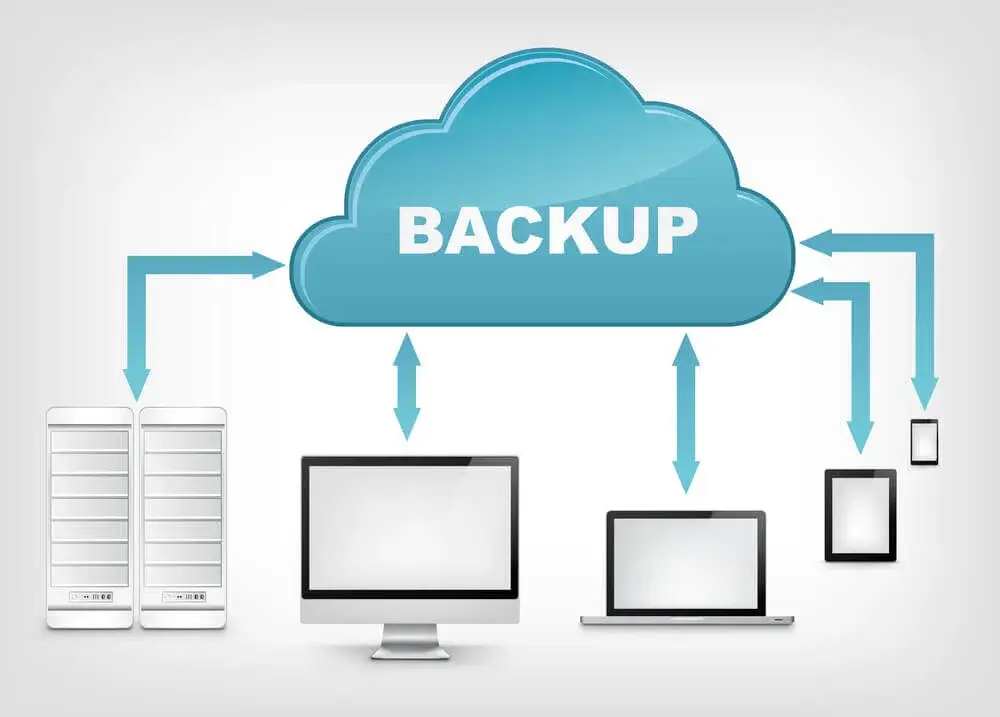
This is one that people really don’t think about. Modern phones use the cloud for backups and this means connecting to the internet to achieve this. They do this while you’re sleeping and faster speeds mean you can backup quicker with less chance of errors.
Better upload, not just better download
Most of the advantages above concern download speed, but moving to a faster connection usually improves upload as well, and on full fibre it can improve it dramatically. Upload is what carries your picture on a video call, your files to cloud storage, and your actions in an online game.
This is the difference people notice most when they move from an older connection to full fibre, and it is the one that never appears in the advertising. Our guide to broadband upload speeds explains what to look for.
Where faster stops helping
It is worth being honest about the limits, because speed is easy to oversell.
Past roughly 100 Mb, most households stop noticing further increases in everyday use. A web page does not load faster on a gigabit line, because the bottleneck becomes the website, your device or your wifi rather than your broadband. Streaming does not improve either once you comfortably clear what the service asks for, since the quality is capped by the programme and your subscription rather than by available bandwidth.
Faster broadband also cannot fix wifi. If the signal does not reach the back bedroom, a bigger package changes nothing at all in that room. That is the most common reason people upgrade and feel no difference. Our guide to boosting your home wifi signal covers the actual fix.
So is it worth upgrading?
The case is strongest when several people use the connection at once, when anyone works from home, when uploads matter, or when you are still on an ageing copper line where the gap to full fibre is large. It is weakest when one or two people browse and stream on a connection that already keeps up.
Before deciding, run a speed test to see what you currently get, and read our guide to what broadband speed you really need to work out what would be enough. Then check what is available at your address, since full fibre has reached a great many streets in the last couple of years, and compare broadband deals.